Buildings
Buildings designed to work with the sun
Building design, refurbishment, extension and specification, up to £1m, in tried and tested traditional construction for thermal mass and long life.
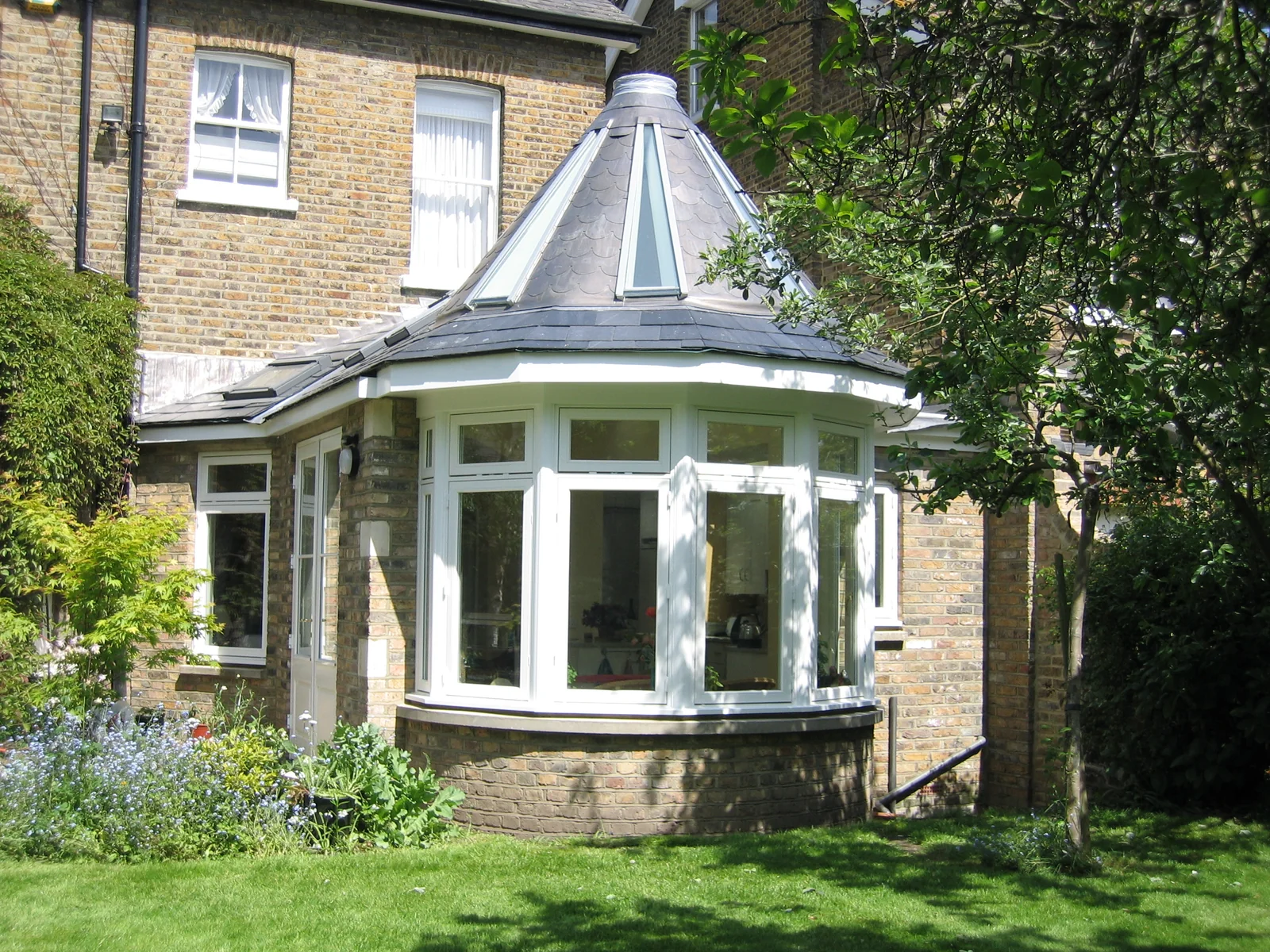
Three kinds of project
Sixteen written-up projects, each kept with all its photos, grouped by the kind of work you have in mind.
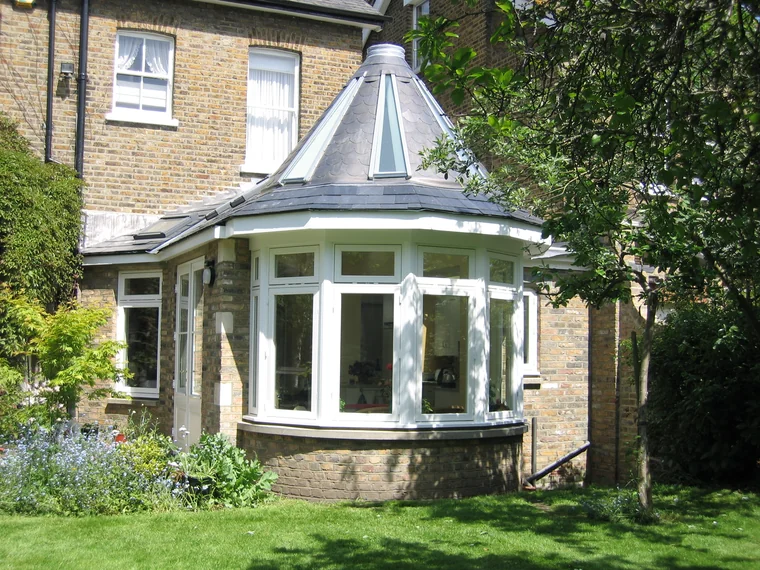
Extensions
Rear, side and roof extensions designed round sunlight and planning limits: roof lights where height is limited, glazed gables with overhangs, shutters against summer overheating.
6 projects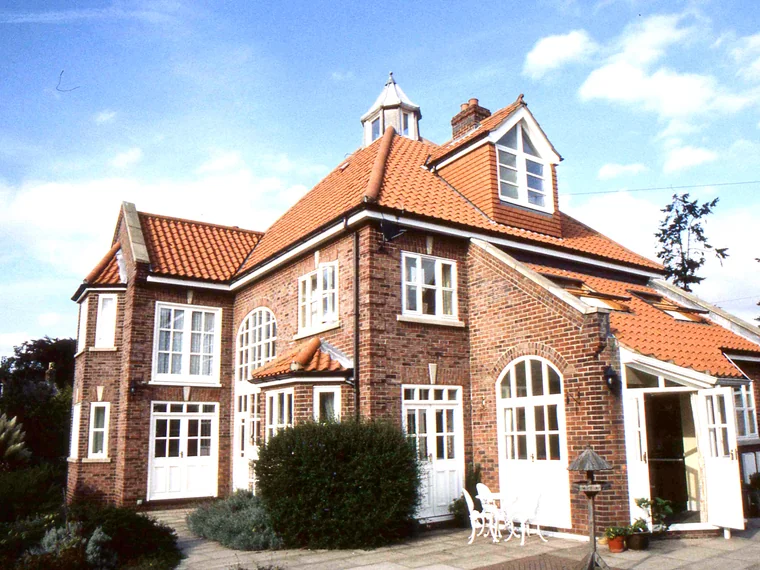
New buildings
A passive solar house, a boat house on the Thames flood plain, a low energy office, a community Men's Shed on Metropolitan Open Land and a 200-seat theatre.
5 projects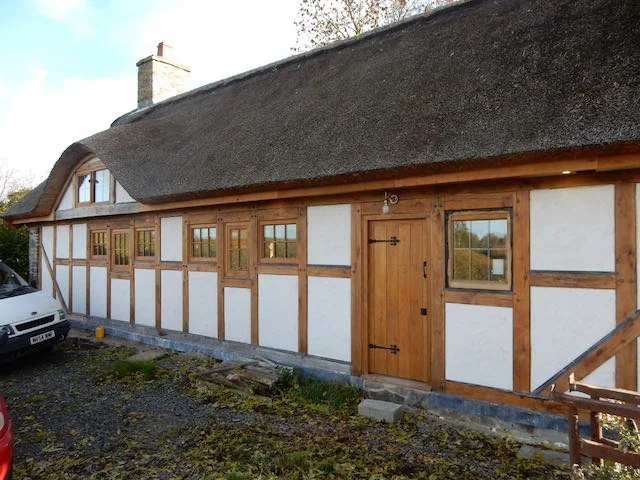
Refurbishment and restoration
A listed Georgian house of 1824, an oak-framed barn in Wales, an Edwardian clubhouse rebuilt after a fire, Victorian apartment blocks and a secure mental health unit.
5 projects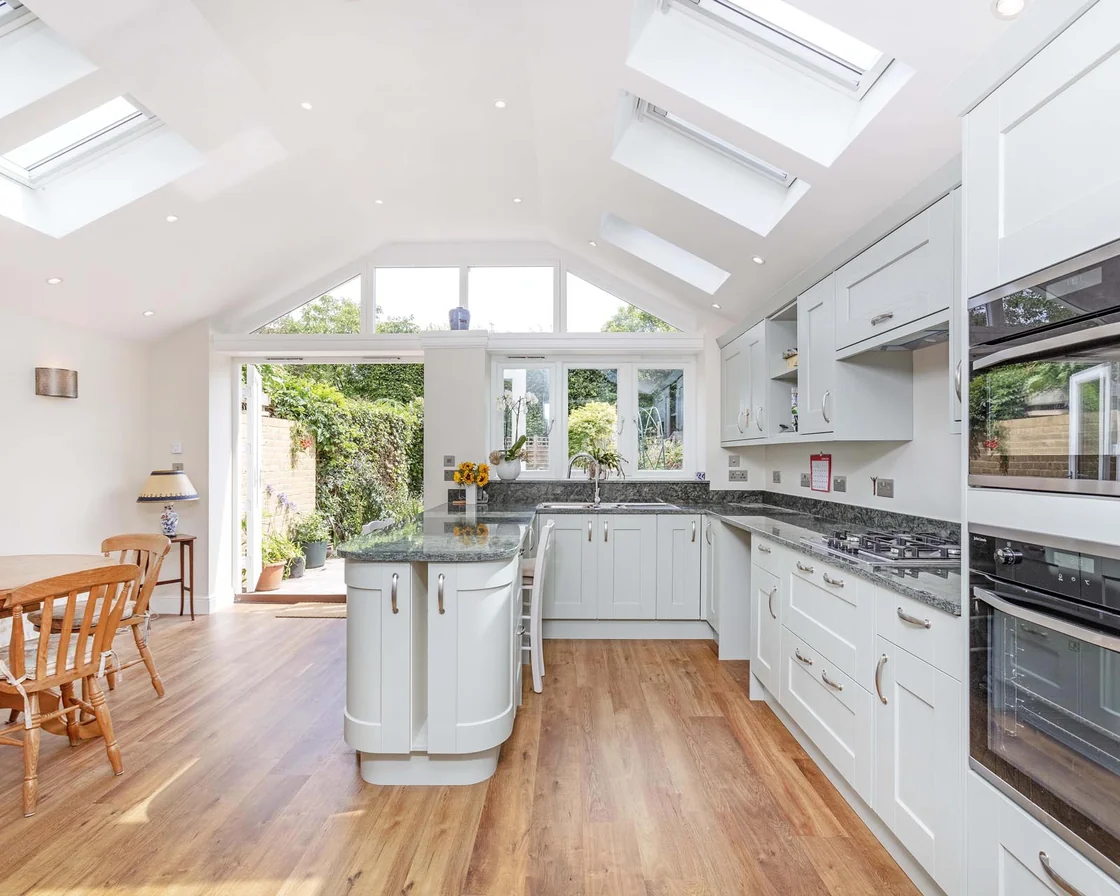
How we design
Bright, airy spaces that are comfortable to live and work in
Exploiting orientation, daylight, sunlight and natural ventilation creates bright, airy spaces. Associated with good insulation, the designs provide comfortable places to live and work. Hence solar architecture.
Projects can be an extension, a total refurbishment or a new building; for big projects we work with other firms. The work includes the design of buildings, managing the project, master planning and urban design, advice on the use or reuse of sites and buildings, technical feasibility studies, reports to submit with planning applications, and party wall awards.
Why a chartered architect
What 'architect' means
Using a qualified architect for a building project is as natural as using a qualified surgeon for an operation.
The terms 'architectural consultant', 'architectural designer', 'interior architect' and 'interior designer', which may or may not have their own institute or regulator, should not be taken to mean the same as 'architect'.
- A protected title'Architect' is a protected word, like 'solicitor', which can only be used by a qualified architect.
- Seven years of trainingFive years in education plus two years of training in practice.
- Regulated by the ARBArchitects are controlled by a regulator, the Architects Registration Board.
- A member of the RIBAThe Royal Institute of British Architects, which also upholds standards.
- Professional indemnity insuranceArchitects have to carry it.
- Continuing professional developmentRequired, to keep up to date.
“There is no right angle in nature… but it is hard to avoid in construction.”
Get in touch
Tell us about the building you have in mind
An extension, a new building or an old one to bring back: email or text Michael with what you have in mind and where it is.
64A White Hart Lane, London SW13 0PZ+44 7838 155739 · envaluation@icloud.com